

 This is the second post in our series on
brewing beer at home, by special guest, award winning brewer Boaz Harel. CLICK HERE to read Part 1: Why make your own beer?
This is the second post in our series on
brewing beer at home, by special guest, award winning brewer Boaz Harel. CLICK HERE to read Part 1: Why make your own beer?
One little piece of advice before you forge
forth: Looking at all this stuff can be intimidating, and it's easy to get
overwhelmed or feel like this is too complicated for you to do. It's not. Making
beer is easy. Primitive stone age people did it 6000 years ago with clay
pots and a bonfire, it it worked fine. The only difference now is that we've
got much better equipment, and many more people to help you if you get stuck.
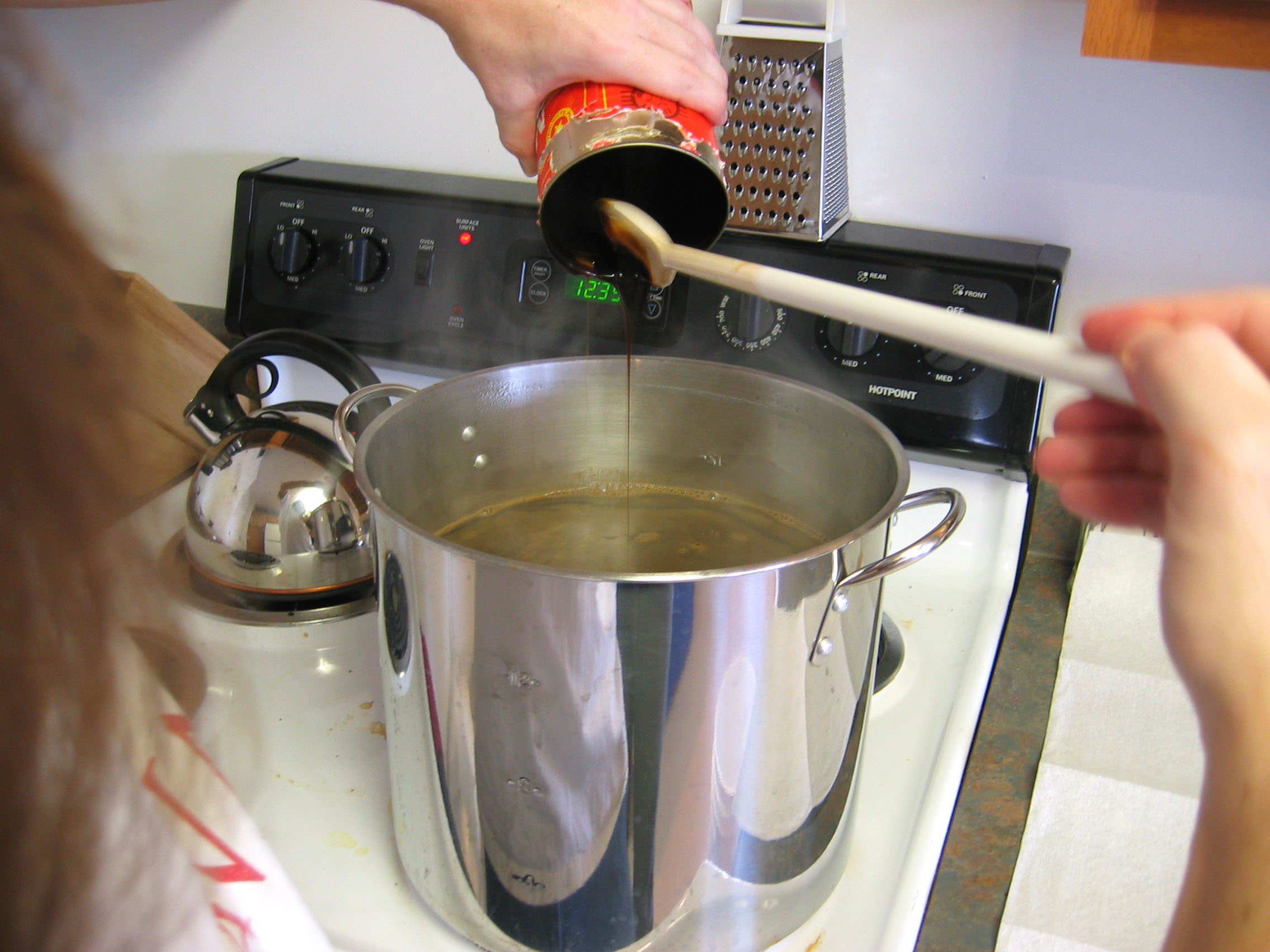 |
| Using Wort Extract by Jason Pratt |
In the Part 1 I discussed why you
should brew your own beer at home. Now, I'm going to talk about the basic process
of brewing, and try to tackle some of the common questions of new homebrewers.
If you are familiar with the process (or are just impatient) you can skip to
the links at the bottom of the post for more concrete instructions and
resources for brewing at home.
Let’s start with the most basic question: What does brewing involve, exactly? Well, simply put, when you brew you take the sugars and flavors from malted grain, mix it with water, boil, season to taste, cool, and ferment. See? It's simple! Now go brew!
Ok, so maybe it's not as simple as it sounds. To get the sugar out of the grain you have to rinse it out with water at specific temperatures for specific times, using the twin processes of "mashing" (soaking the grain) and "luthering" (rinsing the grain and filtering out the particles). Doing this at home means that you start with a bunch of dry grain and end up with a big pot's worth of grain-flavored sugar water, known as "wort." When you start your brewing from grain you are using "all-grain" brewing.
Let’s start with the most basic question: What does brewing involve, exactly? Well, simply put, when you brew you take the sugars and flavors from malted grain, mix it with water, boil, season to taste, cool, and ferment. See? It's simple! Now go brew!
Ok, so maybe it's not as simple as it sounds. To get the sugar out of the grain you have to rinse it out with water at specific temperatures for specific times, using the twin processes of "mashing" (soaking the grain) and "luthering" (rinsing the grain and filtering out the particles). Doing this at home means that you start with a bunch of dry grain and end up with a big pot's worth of grain-flavored sugar water, known as "wort." When you start your brewing from grain you are using "all-grain" brewing.


